I’ve learned that there’s a few writers in my audience. Greetings, fellow sweaters-of-blood! My fellow starers-at-pages!
Today I shall share one of my simplest, and yet most profound, methods of writing improvement. It is merely this.
Target and remove any & all instances of “to be.”
This shows up in several iterations you doubtless recognize: “Am/is/are/was/were”
Here’s an example.
“Robert is sad.
Robin was hiding in the bushes.
Robert and Robin were supposed to arrive at the party an hour ago.”
Hunt these down like you’re two hours from starvation and “to be” is a four-foot-tall chicken. When you find them, either remove the “To Be” entirely, or rewrite the sentence to eliminate its need.
“Robin was thrilled”
Becomes
“Robin squeaked and jumped in place”
See? Much more expressive and evocative.
Sometimes this action requires a full edit for a paragraph or page. That’s okay; it always helps. Here’s what happens if we do this for the previous paragraph:
Robert groused. “Robin, get out of there! The party started an hour ago!”
Robin giggled amid the bush’s green leaves. “No, I’m having fun!”
How to Spot a Hiding “To Be” – The ‘By Zombies’ Test
“To Be” is great at hiding. See, it hid in the previous sentence. You caught it, right?
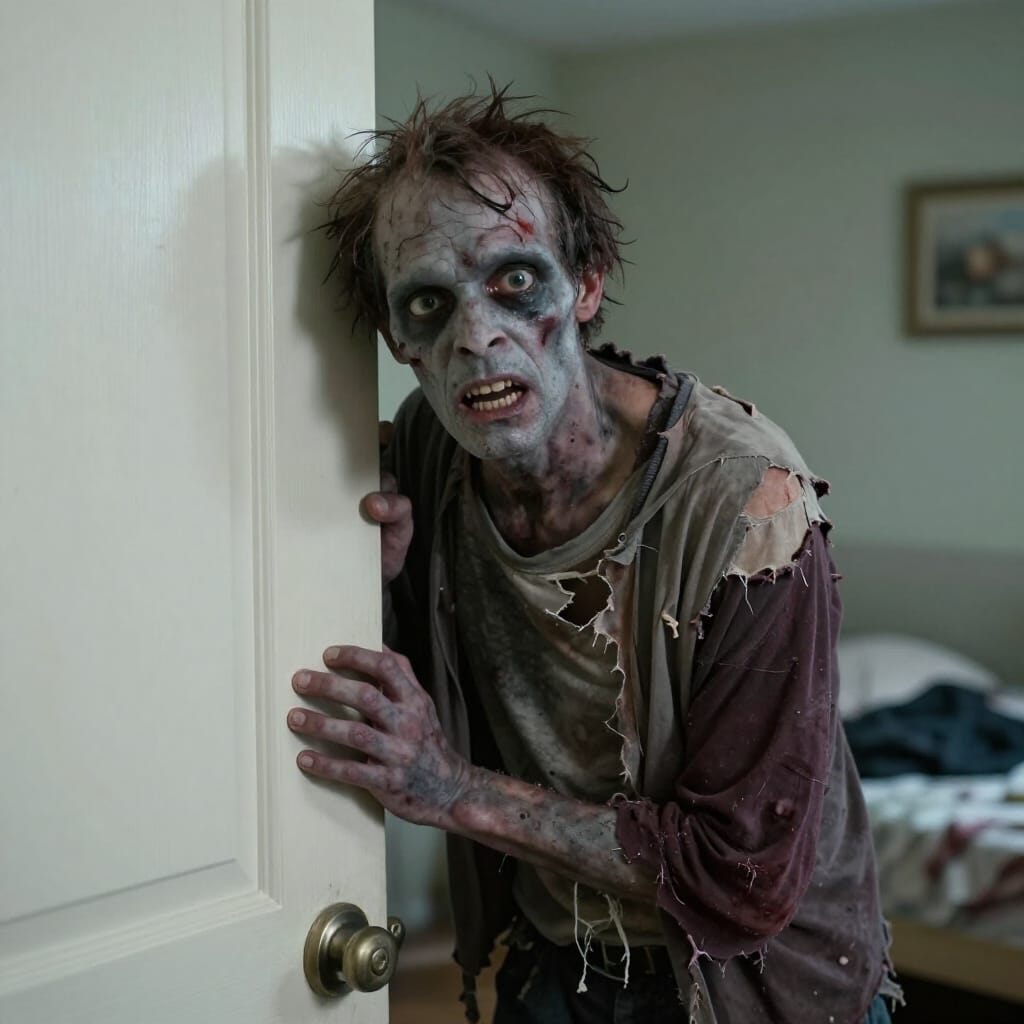
Not to worry though! There’s a trope you can use to spot this. It’s called the “By Zombies” test. Yes, really. I didn’t even make this one up. (I don’t know who did. This seems like something Pratchett or Vonnegut would do.)
Can you add “by zombies” to the end of a sentence, and still make sense of it?
Example:
Robert was harassed – by zombies
Robin was buried in work – by zombies
If the test works, then you have what’s called “passive voice.” The writing talks about something happening TO a character, not a character DOING something.
What you want is “active voice.” This is what makes stories come to life.
Robert shot the zombies.
Robert screamed, “F@#& this!” and shoved the paperwork off his desk in a white flurry.
See? The prose conveys action, directly from the character. And not an am/is/are/was/were in sight.
Search on, “active voice vs. passive voice” for more examples. You’ll find plenty.
Fewer Weak Sentences, Stronger Narratives
You can go “To Be” hunting while you write, or come back afterward to edit. I’ve ingrained this method so much that I do it while writing. Up to you which one works better.
Why do it at all? Because it curbs weak language in a story.
Weak language often pulls the reader out of the story’s flow. It shifts their focus from the action to the wording. “Huh? Why did they ‘bounce’ over the fence? Shouldn’t that be ‘jump’?”
That’s the opposite of what you want. Good flow = good reading.
Do you have to do this for every single instance? No. There are times when, if the story flow won’t tolerate a change, it’s OK to leave it.
Just not often. Too much “To Be” can make the story boring. Regardless of what Shakespeare said.
Go forth and throttle the muse!